Busmap App - Guideline of public transportation
#StartupInsight is a series of analytical articles that focus on the business models, development strategies, and corporate governance challenges of various companies or startups.
If you are a student or just someone who frequently relies on public transportation in Vietnam, you are likely familiar with the digital map app called Busmap. This week, join me as diving into Startup Insight series, where we'll explore the fascinating story of Busmap and the remarkable individual behind this innovative application!
Le Yen Thanh, the founder of Busmap App, laid the foundation for the core technology of the app.
Busmap-City Bus, also known as Busmap, is a digital map application that provides assistance to bus users in major cities like Hanoi and Ho Chi Minh City... After 9 years since its initial launch, Busmap has become a comprehensive tool that offers all the essential features to assist users in efficiently navigating public transportation in Vietnam.
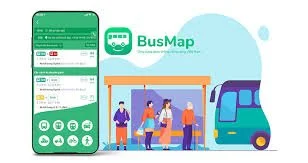
At present, the application boasts an impressive 2 million downloads, with over 400,000 loyal users every month. It has also become the go-to choice for more than 20% of bus riders in Ho Chi Minh City. Busmap currently covers 4 cities in Vietnam: Hanoi, Ho Chi Minh City, Binh Duong, and Da Nang, as well as 2 cities in Thailand: Bangkok and Chiangmai.
Busmap was created and released in 2012 by a team of students at Ho Chi Minh City University of Natural Sciences, under the leadership of Le Yen Thanh. Busmap originated from Le Yen Thanh's personal experiences while studying in Saigon
In 2015, Le Yen Thanh became widely recognised as a highly accomplished individual in the awards village, having received over 100 accolades ranging from domestic to international. Driven by a deep interest in information technology from a young age, Thanh achieved remarkable success during his high school years. He received numerous accolades at both the provincial and national levels for his exceptional skills. Additionally, he utilised his expertise to develop software that effectively handled student discipline, library management, and enrolment for his school. Le Yen Thanh's achievements after entering university are truly impressive. They include winning first prise in the ACM/ICPC Asia international programmer competition in 2013, receiving the ACM/ICPC World Hornorable Mention Award in 2014, earning the ACM/ICPC Asia Bronze Medal in the same year, and even securing the prestigious Gold Cup. 2012 Informatics Olympics, 2014 Golden Globe...
Le Yen Thanh, at the young age of 21, achieved great success by winning the prestigious IT award of Ho Chi Minh City and being recognised as one of the top 10 exemplary young Vietnamese individuals. Throughout his college years, he had the opportunity to work with renowned companies like Misfit, VNG, and Google in the bustling hub of Silicon Valley, USA. Despite being offered a lucrative full-time position at Google, he turned it down and decided to return to Vietnam to start his own business.
From a student-made application to a cutting-edge technology company:
Busmap is a technology start-up led by founder Le Yen Thanh and his team. Introduced in 2012, Busmap is an impressive project aimed at creating a free mobile app for bus commuters.
In March 2019, Le Yen Thanh and Busmap entered the domestic StartUp community with a modest model. From 2019 to March 2020, the founder personally funded the business operations and secured additional capital. At last, in March 2020, Busmap seized an opportunity amidst the pandemic. Le Yen Thanh struck a deal with Phenikaa Group, a versatile Vietnamese enterprise, who invested a substantial amount of money for a majority stake in the company. Through this investment, Busmap Joint Stock Company has now become a part of Phenikaa and has been rebranded as Phenikaa MaaS Technology Joint Stock Company. Le Yen Thanh is building upon the achievements of those who came before, with a clear focus on a specialised market and a strong commitment to utilising advanced mapping technology for the benefit of public transportation. Include.
The concept behind Busmap - City Bus, which follows the MaaS (Mobility as a Service) model, bears resemblance to the data integration project for various urban transport modes initiated by Azmat Yusuf, a former Google employee. With a staggering valuation of over 300 million USD, Busmapper (Citymapper) was established in 2010. In 2012, another app called Moovit emerged with comparable features and has been experiencing significant growth.
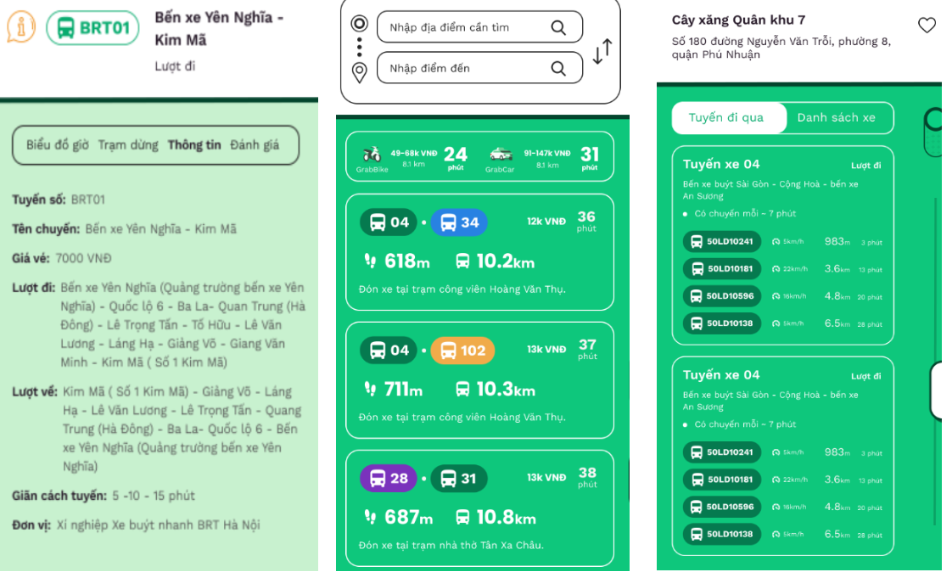
The current version of Busmap is highly intelligent and creates a comprehensive UI/UX. This feature allows for the calculation of the arrival time of the vehicle at the station, thanks to the integration of artificial intelligence and an upgraded prognostic algorithm. BusMap's task is to find and calculate the most efficient travel route using bus routes to recommend to users. This application offers a variety of features, including the ability to search for routes. Discover comprehensive bus route information, Stay updated with live bus waiting times, Access an offline bus map, and Provide feedback through our convenient system.
Map technology and route finding algorithms are fundamental to Busmap's operations. When initially setting up the application, Le Yen Thanh and his team had to rely on mapping technology from other providers. If Busmap does not have its own map technology and relies solely on data from Google Map, they will incur significant monthly expenses for map costs. Thus, Busmap constructed and managed this platform using Bmap in order to minimise expenses, as it only requires servers and bandwidth to host map data. This is an open source project, and bMap utilises data from OpenStreetMap to create platforms that allow for data customisation. Currently, bMap has expanded its usage beyond supporting data for BusMap and is now being utilised for map-related solutions by other units as well. bMap offers a comprehensive range of mapping options, including vector and raster maps. Its SDK is designed to be lightweight and user-friendly, making it ideal for use on mobile devices. Excellent support for less powerful applications and mobile devices. Furthermore, bMap also offers the convenience of offline mode, allowing users to download and utilise it without requiring an internet connection.
It is evident that Busmap has advanced mapping technology that sets it apart from other software technology outsourcing companies. Especially when it comes to route finding algorithms and suggestions, relying on Google's API instead of developing them yourself can be quite expensive. With Busmap, a single server and minimal cost are sufficient to support the entire operating system.
In addition to its own map technology platform, Busmap has the capability to develop various other unique business models. Currently, the Busmap application generates its main revenue through advertising partnerships with various brands. Busmap will feature three primary forms of advertising: Landmarks on the map: The brand symbol will be shown on the road as a pin point. Share promotional codes: offer users effective strategies to capture the interest of potential customers (through the Get Voucher function) and Attention-grabbing advertising: showcase your store to enhance customer recognition.
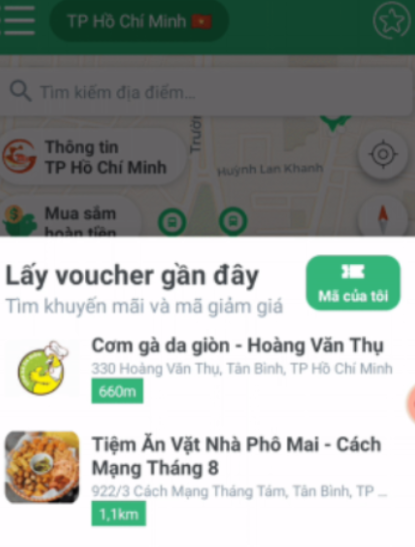
As an illustration, Busmap has partnered with Grab to assist customers in booking a car.
Additionally, Busmap has collaborated with Tichluy.vn to introduce a refund feature for customers who make purchases through the Busmap platform... From the advantage, it is clear With Busmap, brands can easily track the customer's location and target them with special offers and discounts when they arrive at the business. This helps businesses launch enticing vouchers and hot deals to attract customers. The quantity and voucher code will be updated daily and displayed according to your location.
Busmap also generates revenue by offering users the option to sign up for Premium accounts on the app. The Premium Package on BusMap offers exclusive benefits for Android users, ensuring a seamless experience without any interruptions from ads while using the application.
Busmap has created a bus management platform for VinBus, as well as a Smart School platform with a School Bus management system for 4 international schools in Vietnam. They have also developed a Smart School platform for schools. Platform for managing company buses for employees... As part of the B2G model, the company has developed solutions like a public vehicle management system that includes fire trucks, ambulances, and transport vehicles. Waste management initiatives are being implemented in Da Nang...
Furthermore, amidst the pandemic, Busmap is also implementing the CovidMap epidemiological map for areas experiencing outbreaks.
What are the exact distinctions between Busmap and Google Map?
Busmap has the capability to be utilised in offline mode for obtaining instructions, although Google lacks this functionality. Furthermore, Google Maps allows for a broader geographical scope on the map compared to Busmap. Unlike Busmap, which is restricted to current cities, Google Maps does not impose any limitations on the search scope. In contrast, Busmap has a competitive edge in big cities with local bus systems due to its access to data from local agencies. This allows it to update route information more promptly and with greater precision. Both applications have the capability to input destinations and provide itineraries. However, due to the comprehensive system of bus routes, Busmap is able to offer a greater number of options compared to Google Maps. Google Maps' suggestions are limited in their ability to present sophisticated routeing options including many bus routes and transfers. Google Maps excels in providing instructions and navigation options beyond bus routes. Presently, Busmap offers the most efficient assistance for bus travel.
Potencial and Development of Busmap
What led to the establishment of Busmap as an official company for management and development, six years after its inception?
Busmap has always operated as a non-profit endeavor. From 2013 to 2018, Busmap's Founder dedicated their efforts to various startup projects, unfortunately without success. However, in 2019, they decided to shift their focus to this particular project and the advancement of mapping technology became their primary objective. In 2019, BusMap boasted an impressive user base, with a staggering one million downloads. It was estimated that three out of every ten bus riders in Ho Chi Minh City had the application installed on their devices. If the app continues to grow organically, there may come a point where there is insufficient funding to sustain its operations, which could have an impact on the rights of the app's users who rely on it. Based on data from the Department of Transport of Ho Chi Minh City in 2018, an average of over 10 million individuals utilize BusMap each month to fulfill their bus travel requirements. This accounts for approximately 20% of the total number of trips. I regularly use public transportation.
In 2018, Busmap had approximately 800,000 downloads. On a monthly basis, approximately 20% of bus riders rely on Busmap. It is evident that 20% is a rather modest figure. Based on the latest statistics from 2021, the majority of bus service users consist of students, low-income out-of-province workers, and middle-aged and elderly individuals. Busmap's functions and approach appeal to a significant portion of the population, specifically young individuals who have access to technology through smartphones. This demographic, consisting of students and workers, comprises around 70% of Busmap's target customer group. So that implies Busmap is only able to reach 30% of its intended customer base. During the years 2018 and 2019, Busmap had a relatively small market share and experienced slow growth. This could be attributed to the marketing strategies and development objectives pursued by Busmap during that period. As stated, during that period Founder Busmap had his attention on other projects. However, in 2019, he founded the company and dedicated all his energy to the growth of Busmap.
Is Busmap meeting the needs of the community as a community-based application?
In 2012, when Busmap was first introduced, this application was considered innovative since there was no navigation system like Google Maps in Vietnam at that time. Although some bus map apps were available internationally, they were not yet available locally. After a decade, Busmap has greatly improved and enhanced the user experience for Bus users. At present, when it comes to maps, especially those for buses, Busmap remains the top choice in Vietnam based on usage statistics. As stated earlier, when it comes to bus maps, Busmap has certain strengths compared to Google Maps and other apps. However, in terms of overall map technology, Busmap is lagging behind and being outperformed by Google Maps in terms of features and scale of solutions.
In the near future, BusMap's commitment to expanding their routes, including Grab, Intercity Bus, Waterbus, Ferry, Metro, will need to be exceptional in order to compete with the continuously improving Google Map. They will have to offer better and more advantageous features to stay ahead. Otherwise, Busmap risks being outperformed in the future by a free and versatile application from the industry giant, Google.
What is the reason behind Phenikaa's investment in Busmap?
Phenikaa, established by entrepreneur Ho Xuan Nang, relies on BusMap as the fundamental technology support for creating customized applications that address individual user needs and solve various problems. There is a wide range of issues that the group encounters in their life, production, and business. Phenikaa MaaS has the potential to broaden its range of transportation offerings for businesses, organizations, and communities. This includes advanced level four autonomous vehicle products and intelligent cars equipped with convenient starting points. One important aspect is to discover the most convenient travel route within expansive resorts and university campuses, utilizing the advanced map technology offered by Busmap.
It is evident that Phenikaa Group has specifically focused on the young talent team of Busmap through their application. Phenikaa Group is determined to achieve excellence in the field of science and technology in the regions. Thus, Phenikaa Group achieves its objective by investing in and supporting promising technology start-up/spin-off companies like Busmap. They provide sponsorship for initiatives and projects that focus on researching and developing cutting-edge technologies, innovations, and startups that have a positive impact and practical benefits for the community.
Regarding Busmap, it seems that the founder, Le Yen Thanh, and his team have come to the realization that the technologies utilized in the application can effectively address significant challenges. For businesses and organizations, the emergence of Phenikaa MaaS is a step in the right direction.
Phenikaa MaaS (Busmap) has set its sights on becoming a top player in the field of smart transportation solutions. The company offers a range of solutions, including IoT devices for travel management, travel support apps, custom map creation, and AI & Big Data services for artificial intelligence development and data processing. In order to accomplish this objective, the company plans to create vehicle management solutions that are tailored specifically for the needs of businesses and government organizations. In addition, the company will also expand its offerings in various areas. For example, starting from the bus management solution, Phenikaa MaaS has now ventured into developing a Smart School Management System. This expansion includes a range of different products, such as IoT solutions for controlling and operating the travel process, travel-supporting applications, custom map building, multitasking capabilities, and AI & Big Data for artificial intelligence development and data processing. The company is also involved in providing smart traffic services.
Crystal Le,
22/7/2022.